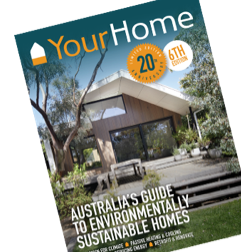
Your Home is Australia’s independent guide to designing, building or renovating homes to ensure they are energy efficient, comfortable, affordable and adaptable for the future.
Buying or building a home is one of the most important financial investments people make. And many of the homes we build today will still be in use in 50 or even 100 years.
The decisions made early on can affect the liveability of your home and the cost of living for decades to come. These choices can support your home to be liveable and adaptable to changing needs so that it remains comfortable, efficient and cost-effective in the long term.
The design principles and climate-appropriate features described in Your Home can make a home more affordable and comfortable over its lifespan.
What is a sustainable home?
A sustainable home incorporates climate-appropriate design features like correct orientation, thermal mass, insulation, shading and glazing to take advantage of natural sources of heating and cooling. When incorporated in the right way for your climate, they can keep a home’s occupants comfortable throughout the year.
Sustainable homes maximise the use of energy-efficient products and environmentally durable materials for long-term lifestyle benefits. This can reduce ongoing household costs due to lower energy bills and reduced maintenance costs. Other benefits may include improved indoor air quality, thermal comfort and a sense of wellbeing, thus reducing ongoing health costs.

Who is Your Home for?
Your Home is for everybody. If you want to know more about buying, building, renovating or living in sustainable homes, Your Home will help.
Your Home helps householders understand how to design and live in a sustainable home. It explains the process of building and renovating and the things to ask your designer and builder to ensure you get the home you want and make informed choices.
Your Home helps architects and designers understand the principles of sustainable design and how they can be practically applied in different climates. It can be used as a tool to support the design process or to develop knowledge and expertise on industry best practice.
Your Home helps builders understand the range of materials and technologies available to support the construction of sustainable homes and to understand specific issues like condensation or waste management.
Your Home helps students, researchers and policy makers to understand sustainable home design, energy efficiency rating schemes and other aspects affecting residential sustainability.

Photo: © Tatjana Plitt Photography
How to use Your Home
Buying, building or renovating a home can be daunting. Your Home is designed to help you on this journey to find the right information at the time you need it most.
You can read the content by theme, the stage you are at in the building process, or the type of project. You can read it all, or search for what you need. Each chapter has References and further reading if you want to delve deeper, and a list of related topics to learn more.
Your Home is organised into themes:
- Buy, build, renovate is a great starting point. It outlines things to think about at every stage, from planning through to design, construction and renovation.
- Passive design gives you the key principles in building or renovating a home to suit your climate, to reduce energy use and deliver comfort.
- Materials discusses the various construction products and systems for a home.
- Energy provides information about using energy, including options for renewable energy generation.
- Water explores how to reduce water use and recycle water inside and outside your home.
- Live and adapt looks at options to make your home liveable now and adaptable in the future to cope with changing situations, lifestyles and climate.
- Case studies from around Australia provide a selection of real-world examples of how these concepts can be applied.
- Design For Place provides a range of free energy-efficient architect-designed home plans that follow Your Home principles and are energy rated to 7 stars or more.
We hope that you find Your Home useful now and into the future.
If you have a story to share about using this resource, please make contact via the Contact Us page.